
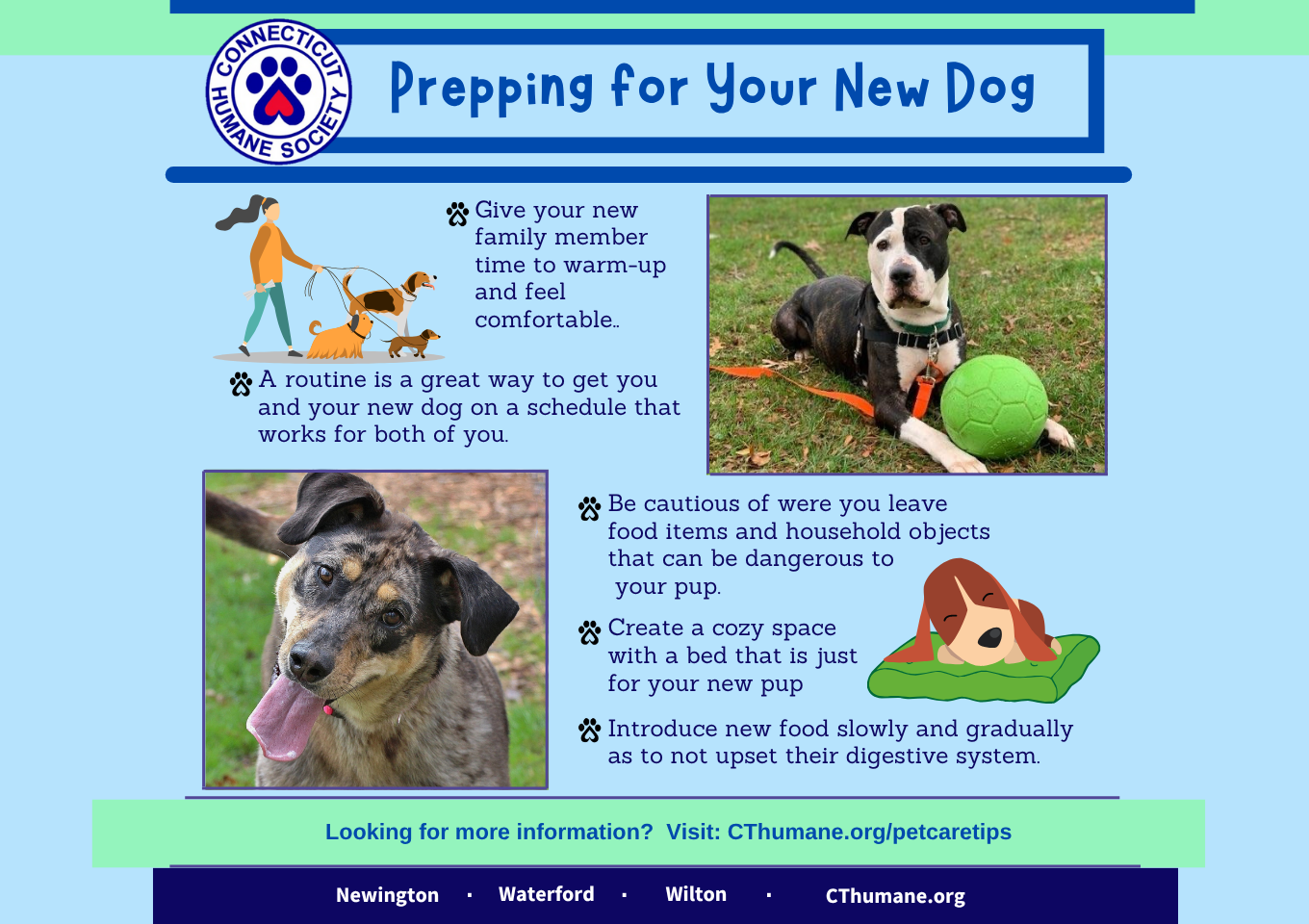
“What pet should I get?” It’s not just the title of a Dr. Suess book, it’s a question often heard from a first-time visitor to the Connecticut Humane Society. You’ve already thought about the pros and cons and whether or not you’re ready to get a pet, but you still might be on the fence about what type of pet you want. Or maybe you just adopted a pet, and you want to make sure you’ve covered all your bases. Check out these tips to start.
Basic Information
- Average Size: Sizes can range from very small to quite large depending on breed.
- Average Lifespan: 8-16 years.
- Estimated Cost Per Year: $730 on average depending on size.
Dog Supply Checklist
- Dog food
- Dog treats
- Food dish
- Water bowl
- Toys! Including chew safe toys
- Brush & Comb for grooming
- Nail trimmers
- Collar with license, ID tag and rabies tag
- Harness
- Leash
- Carrier (for small dogs)
- Dog bed
- Training crate
Never Feed Your Dog
- Alcoholic beverages and coffee
- Chocolate
- Macadamia nuts
- Grapes and raisins or avocados
- Onions, garlic and chives
- Cooked poultry bones
- Salt and salty foods
- Tomato leaves and stems
- Yeast dough
- Unripe fruit
- Moldy foods
- Mushrooms
- Human medications
Feeding
- Thanks to a very generous shelter program, CHS feeds Hill’s Science Diet in the shelter.
- Feed your puppy or dog a brand of dog food that meets nutritional guidelines to provide a well-balanced diet.
- Overfeeding, over treating and table scraps can lead to obesity and health issues.
- Kong feeding is a great way to fulfill your dogs need to work for their food. It also helps to cure boredom and prevent destructive behaviors.
- Fresh water should be available to your pet at all times.
Bedding & Housing
- Your new dog needs a warm, comfortable place to rest. Ideally, this is away from drafts and off the floor.
- Dog beds can be placed inside crates or used alone. Bedding should be dry and washed often.
- A training crate is a great option. It gives your new pet a place of their own and keeps your dog contained when you are not home.
- Your new dog should be an integral part of your family. Dogs should live inside with the family. If your dog likes to spend time outside, make sure they have shelter, water, are safely contained and are never left unattended for long periods of time.
Grooming
- Some dogs do not enjoy grooming. They will need to be seen by a professional groomer regularly to meet grooming requirements if this is the case.
- Frequent brushing will help to keep your dog clean and minimize shedding.
- Grooming requirements vary depending on the dog’s breed and hair coat type. Dogs with long curly fur may need to be groomed more often than those with short straight coats.
Handling
- Never attempt to lift or grab a puppy or dog by the legs, tail or back of the neck. This can be painful and can irritate your pet.
- To carry a puppy or small dog place one hand under the dogs chest while supporting the hind legs and rump.
- Keep in mind, some animals don’t like being picked up. This can agitate them. If your pet doesn’t like to be picked up, it is best to respect his or her space.
- Try not to over handle your new pet. It can lead to stress and lashing out.
Licensing
- All towns and cities in Connecticut require annual licensing. Visit your town hall to register your new pet.
- Your pet should wear a collar with a license, an updated ID tag and a rabies tag. This will help to reunite you with your pet in the event they ever become lost.
- Your new pet has been microchipped for you while staying here at the shelter! This helps to secure your dog’s return if he or she ever becomes lost. Be sure to maintain owner registration information.
Exercise & Play
- Individual exercise needs vary based on breed, age and health status.
- Exercise helps burn calories and energy. This can prevent boredom which often leads to destructive behaviors. Supervised play will help satisfy your new pets need to dig, retrieve, herd, chew and chase.
- Please don’t use your hands or fingers as toys when playing with puppies. Although it seems harmless now, this can lead to biting behaviors in the future.
Behavior
- Using positive reinforcement to teach your dog the basics (sit, stay, come, heel, off and leave it) will improve your relationship with your new dog.
- If you have a puppy, start teaching manners as soon as possible!
- Keep your dog on a leash when in public places. Be sure your new pet will come to you when called. A disobedient or aggressive dog should never be allowed off leash.
Veterinary Care
- While staying at CHS your dog has received a physical exam and you have been given a copy of all the records.
- Your new dog should see a veterinarian for a full physical examination at least once a year. At the wellness visit, your veterinarian can determine which vaccines and diagnostic tests are necessary.
- CHS recommends that new pets see a veterinarian within two weeks of adoption.
- If your pet ever seems sick or injured, seek veterinary help immediately.
Spaying & Neutering
- Your new dog has already been spayed or neutered! This surgery reduces over population and has significant health and behavior benefits.
- Dogs can produce large litters of puppies when bred. Spaying and neutering helps to reduce overpopulation and decrease the number of homeless and unwanted dogs long term.
- Spaying significantly reduces the risk of breast cancer, a serious disease of older female dogs. Spaying also eliminates the risk of pyometra, an infected uterus, which requires emergency surgery and extensive medical care.
- Neutering males prevents testicular cancer and reduces the occurrence of prostatic enlargement, hernias and certain types of aggression.
REMEMBER
Your new pet has just been through a lot. CHS does its very best to make animals as happy as possible, but the shelter can be a stressful place. The transition to a new home can be stressful as well. Give your dog time to settle in.
It’s a good idea to leave crates with just newspaper bedding until you know your dog won’t rip or chew up new dog beds.
Try to really get to know your dog before putting him or her into stressful situations. Let your pet hang out at home for a few weeks, and keep house guests to a minimum.
If you are bringing your new dog home to another pet, give pets some time to meet and feel comfortable. Keep pets separate for a few days, and only allow them to be together while supervised until you are completely comfortable trusting them alone.
Dogs and puppies like to explore and can get themselves into trouble! Before your new pet is allowed to roam the household, your house should be dog or puppy proofed.
Check out the video below for kid-friendly dog care tips: