
“What pet should I get?” It’s not just the title of a Dr. Suess book, it’s a question often heard from a first-time visitor to the Connecticut Humane Society. You’ve already thought about the pros and cons and whether or not you’re ready to get a pet, but you still might be on the fence about what type of pet you want. Or maybe you just adopted a pet, and you want to make sure you’ve covered all your bases. Check out these tips to start.
Rabbits can be great pets for some families. They are wonderful companions and have big personalities enviable to canine and feline companions. With proper care, pet rabbits can live 6-12 years! Read on for tips and tricks for success with your bunny.
Diet
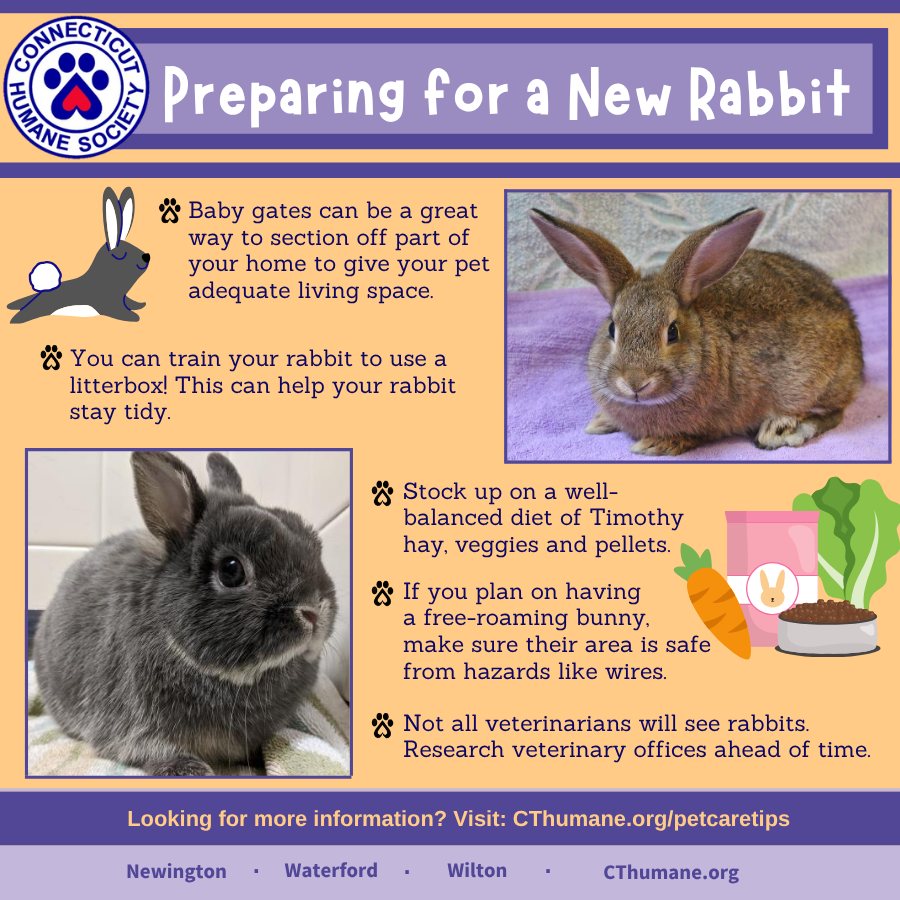
One of the most basic, yet commonly misunderstood, components of rabbit care is providing an appropriate diet:
- Rabbits have a unique digestive system that requires them to eat constantly when they are awake.
- Just like humans and other pets, snacks should not be a major part of a bunny’s diet!
- It’s more than lettuce and carrots (which should be given in supplement to a regular balanced diet) – A healthy bunny diet consists mostly of grass hay, especially Timothy hay, and pellets.
- Fruits and vegetables can be added when your bunny is around 3 months old. Tiny pieces of carrot and apple can be part of their diet, but foods like broccoli and cauliflower can cause upset tummies and other harm.
Housing
Similar to cats and dogs, rabbits are much happier and healthier living as indoor pets.
- Your bunny’s cage should be large enough to keep their litter box separate from their living space, and there should be plenty of room to move around.
- A wire mesh floor can irritate and injury a bunny’s feet, so stick to solid flooring.
- It is best to allow your rabbit to have ownership of their cage by never forcing them in or out and refrain from cleaning their cage when they are inside.
Note that rabbits can be quite territorial, and will show this by depositing their pellets or droppings around their cage, their litterbox and their surroundings.
Training & Enrichment
Rabbits need to have playtime outside of their cage every day.
- Out-of-cage time gives an opportunity to exercise and have fun. It is also a chance for you to bond with your bunny, cuddle and/or teach tricks.
- Gentle coaxing and reward-based training will help bunnies learn most effectively, and the positive bond you’ll form will reap rewards as your bunny learns to be a polite family member and more.
- You can train a bunny to use a litterbox! Many rabbits spend a good deal of time with their litterbox, even sitting or napping in it, or even eating in it. Training a bunny to use the litterbox will involve a bit of training of you, too – the rabbit will decide where to poop, and that is the area where you will place their litter box.
Veterinary Care
As with any family member, a rabbit should see a veterinarian for regular checkups. At 4-6 months, bunnies will begin marking their territory as their hormones kick in, so spaying or neutering your rabbit will curb with this behavior as well as help with litterbox training. Spaying/neutering your pet rabbit will not only prevent the chance of unwanted baby bunnies, it will also do wonders for preventing bad bunny behavior and the chance of health problems related to the reproductive system, like cancer.
Check out the video below for kid-friendly rabbit care tips.
