
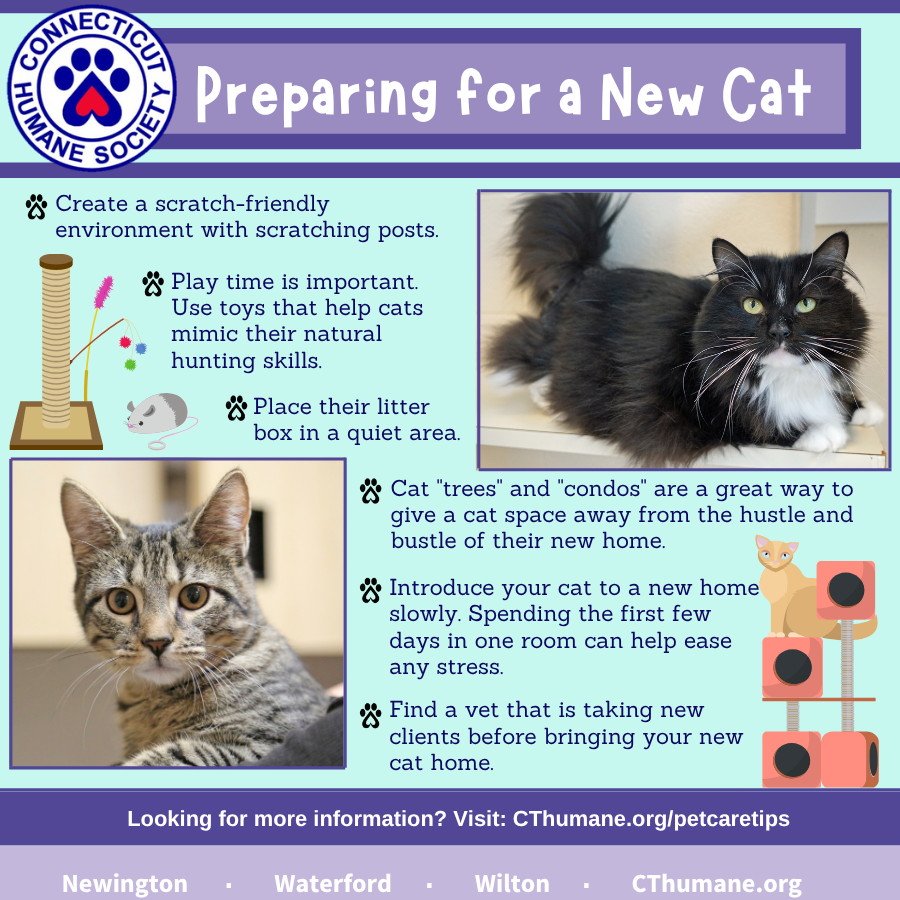
“What pet should I get?” It’s not just the title of a Dr. Suess book, it’s a question often heard from a first-time visitor to the Connecticut Humane Society. You’ve already thought about the pros and cons and whether or not you’re ready to get a pet, but you still might be on the fence about what type of pet you want. Or maybe you just adopted a pet, and you want to make sure you’ve covered all your bases. Check out these tips to start.
Basic Information
- Average Size: 8-11 pounds on average but larger breeds can weigh 15+
- Average Lifespan: 13-17 years
- Estimated Cost Per Year: About $670 on average.
Cat Supply Checklist
- Cat food
- Cat treats
- A food dish
- A water dish
- Lots of interactive toys
- A brush and comb for grooming
- Flea comb
- Nail trimmers
- Scratching posts or pads
- Litter boxes
- Litter
- Carrier
- Cat collar with ID tag
- Cat bed
Never Feed the Following
- Alcoholic beverages
- Chocolate
- Coffee
- Grapes and raisins
- Onions, garlics and chives
- Cooked poultry bones
- Salt and salty foods
- Tomato leaves and stems
- Yeast dough
- Moldy foods
- Human medications
- Milk or cream
- Check household plants
- Mushrooms
Feeding
- Thanks to a very generous shelter program, CHS feeds Hill’s Science Diet in the shelter.
- Feed your kitten or cat a brand of cat food that meets nutritional guidelines to provide a well-balanced diet.
- Overfeeding, over treating and table scraps can lead to obesity and health issues.
- Kong feeding is a great way to fulfill your cats need to work for their food. It also helps to cure boredom and prevent destructive behaviors.
- Fresh water should be available to your pet at all times.
Bedding & Housing
- Your new cat needs a warm, comfortable place to rest. Ideally, this is away from drafts and off the floor.
- Please keep your cat indoors unless otherwise discussed with your adoption counselor. Cats who are allowed outdoors can contract disease, get ticks or parasites, become lost or get hit by a car, and get into fights with other cats, dogs or wildlife.
Litterbox
- Your new cat’s litterbox should be in a quiet, accessible location such as a bathroom or utility room. Avoid moving the box unless absolutely necessary.
- In a multi-level home, one box per floor is ideal. In a multi-cat home, each cat should have their own box.
- Cats are less likely to use a dirty litterbox. Remove waste at least once a day. Dump everything, wash with mild detergent and refill at least once a week. Avoid using ammonia, deodorants or scents (especially lemon) when cleaning the litterbox.
- Cats can be picky about which type of litter and litter box they use. Sometimes it can take a few tries to get it right. Once the cat is successfully using the litterbox regularly, limit changes to help avoid accidents.
Click here to learn more about litterbox avoidance.
Grooming
- Most cats rarely need a bath. However, you should brush or comb your new pet regularly. This will keep your cat clean, minimize shedding, and reduce hairballs and matting.
- During your grooming sessions, check for wounds, hair loss and inflammation. Also look out for fleas and flea dirt.
- Some cats tolerate grooming better than others. If your cat does not like grooming, you may need to take him or her to a professional groomer.
Handling
- Never attempt to lift or grab a kitten or cat by the legs, tail or back of the neck. This can be painful for your pet.
- To pick up a cat, place one hand behind their front legs and another under the hindquarters.
- Keep in mind, some animals don’t like being picked up. It is best to respect your new pet’s space if this is the case.
- Try not to over handle your new pet. This can lead to stress and lashing out.
Identification
Your new pet has been microchipped for you while staying at CHS! This helps to secure your cat’s return if he or she ever becomes lost. Be sure to maintain owner registration information.
Exercise & Play
- Playing with interactive toys allows your cat to exhibit normal predator-type behaviors safely from inside the house.
- Please don’t use your hands or fingers as toys when playing with kittens. Although it seems harmless now, this can lead to scratching and biting behaviors in the future.
- Avoid toys with strings or pieces that can break off and be ingested. This can lead to objects getting lodged in the intestine.
Scratching
- Your cat needs to scratch! When they scratch, the outer nail sheath is pulled off and the sharp, smooth claws underneath are exposed. Trimming your cats nails every 2 to 3 weeks will keep them blunt and less likely to harm you or your furniture.
- Provide your cat with a sturdy scratching post. There are many types, so try different materials (carpet, cardboard, etc.) and layouts (flat or tower-style) to find the right one for your cat.
Veterinary Care
- While staying with CHS your cat has received a physical exam and you have been given a copy of all the records.
- Your new cat should see a veterinarian for a full physical examination at least once a year. At the wellness visit, your veterinarian can determine which vaccines and diagnostic tests are necessary.
- CHS recommends new pets see a veterinarian within two weeks of adoption.
- If your pet ever seems sick or injured, seek veterinary help immediately.
Spaying & Neutering
- Your new cat has already been spayed or neutered! This surgery reduces over population and has significant health and behavior benefits.
- Cats can breed up to three times a year. Spaying and neutering helps to reduce overpopulation of cats and decrease the number of homeless and unwanted cats long term.
- Spaying significantly reduces the risk of breast cancer, and eliminates the risk of pyometra, an infected uterus, which requires emergency surgery and extensive medical care.
- Neutering males can prevent urine spraying, decrease the urge to escape to look for a mate, and reduce fighting between males.
REMEMBER
Your new pet has just been through a lot. Although CHS does its very best to make animals as happy as possible, the shelter can be a stressful place. The transition to a new home can be stressful as well. Give your new cat time to relax and settle in.
Really get to know your cat before putting him or her into stressful situations. Let your pet hang out at home for a few weeks and limit visitors.
Sometimes it’s a good idea to keep pets separate. This can be done either in separate rooms or by a baby gate. This allows pets to see and smell each other without getting too close, and helps pets get politely acquainted.
Cats and kittens like to explore and can get themselves into trouble! Before your new pet is allowed to roam the household, your house should be cat or kitten proofed.
Check out the video below for kid-friendly cat care tips.