
“What pet should I get?” It’s not just the title of a Dr. Suess book, it’s a question often heard from a first-time visitor to the Connecticut Humane Society. You’ve already thought about the pros and cons and whether or not you’re ready to get a pet, but you still might be on the fence about what type of pet you want. Or maybe you just adopted a pet, and you want to make sure you’ve covered all your bases. Check out these tips to start.
Basic Information
- Average adult size: 4-5 inches long
- Average life span: 2 to 3 years with proper care
- Hamsters should be kept individually. If hamsters are kept together, breeding or fighting is likely to occur.
- Hamsters are nocturnal; they are active during the night and sleep during the day.
- Always wash your hands after handling your pet, or cleaning its dishes, cage, toys, etc.
Diet & Feeding
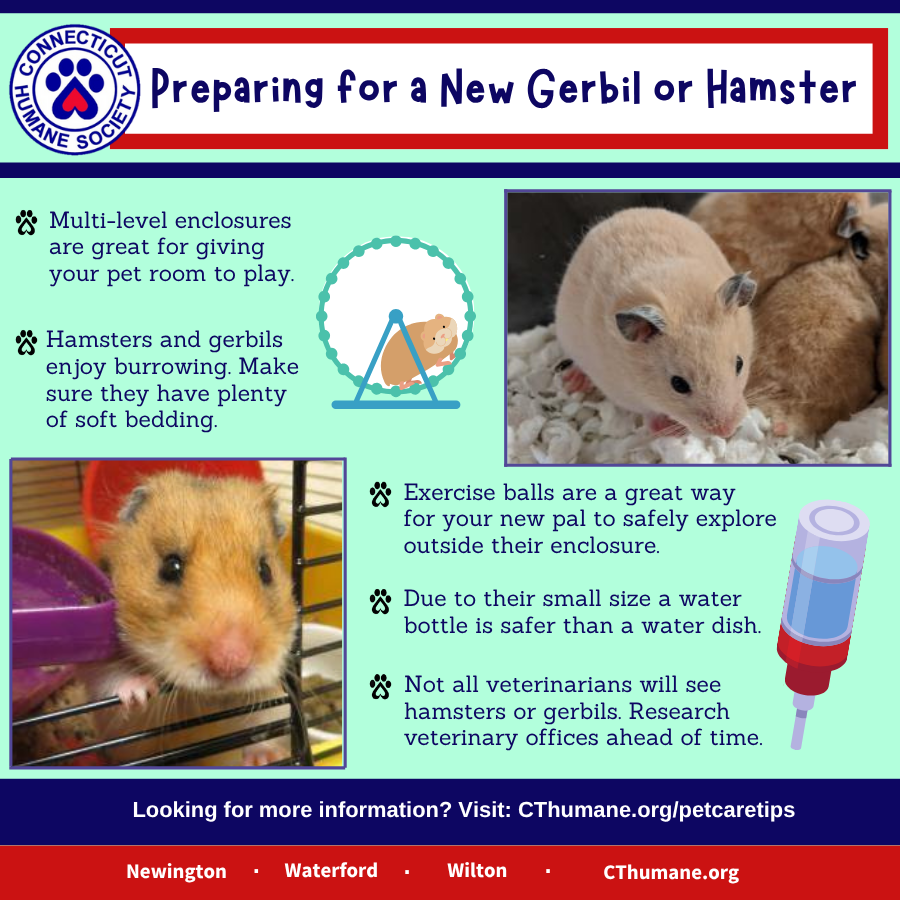
- Fresh food and water should always be available. Most hamsters are accustomed to drinking from a water bottle.
- Species specific pellets or lab blocks should make up 90% of their diet, along with small amounts of fresh vegetables, fruits, and timothy hay. Many hamsters are used to a seed-heavy diet. They should be transitioned gradually onto a pellet food.
- Vegetables and fruits not eaten within a few hours should be discarded.
- Clean, fresh, filtered, chlorine-free water, changed daily.
- Do not feed chocolate, caffeine, or alcohol as these can cause serious medical conditions.
- Avoid sugar and high fat treats.
Housing
- Hamsters acclimate well to average household temperatures, not above 80°F. Avoid extreme temperature changes. The habitat should be placed off the floor in an area that is away from drafts.
- A habitat should be plastic, metal, or glass with an escape proof solid bottom. It is best to provide the largest habitat possible.
- 1-2” of paper bedding, such as Carefresh, is recommended. Cedar shavings should never be used as bedding.
- Clean and disinfect the habitat and non-porous toys regularly; remove wet spots daily and change bedding at least once a week or more often if necessary.
- Provide a variety of chewable toys to promote proper teeth wear as rodent’s teeth grow continuously throughout their life.
- Hamsters should also be given a place to hide.
Health & Veterinary Care
A healthy hamster should be active, alert, and sociable, eating and drinking often, with healthy fur and clear eyes. A hamster that is inactive, losing weight, has diarrhea, hair loss, or distressed breathing may be sick. If you notice these signs, discharge from the eyes or nose, or other problems, please see your veterinarian right away.
Check out the video below for kid-friendly hamster care tips.