
What is Canine Resource Guarding?
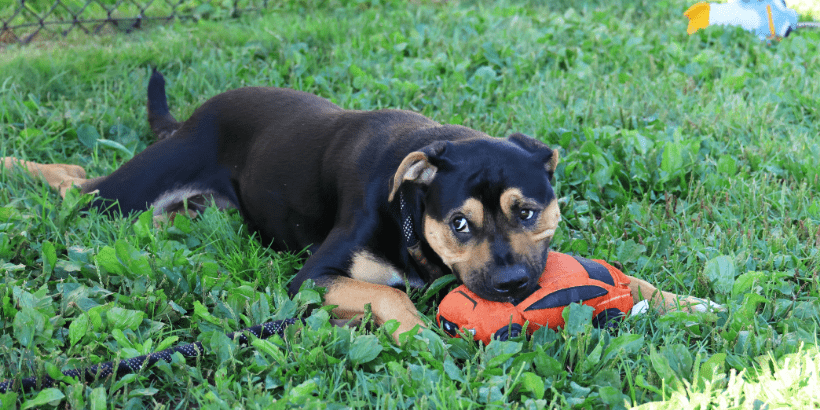
Dogs with possession aggression, also known as resource-guarding, react inappropriately when approached while engaged with a non-edible item the dog values. They will often display aggressive behavior when a person reaches for a toy or stolen item, such as a sock, a piece of trash or paper.
What are the Signs?
Dogs with this type of aggression may stiffen, curl their lips, snarl, growl, lunge and/or try to bite if they think a person may take away a valued item. This type of aggression only includes the guarding of non-edible items; the guarding of edible items may suggest a different type of canine aggression.
What are the Causes?
Before they were man’s best friend, dogs were wild animals and guarding possessions from humans or other animals was essential for survival. Wild animals that successfully protect their valuable resources, like food, mates and territory, are more likely to survive than those who don’t. Despite the historical benefit of this behavior, the domestication of dogs has made this behavior inappropriate and potentially unsafe.
How is it Diagnosed?
Possession aggression can be diagnosed by a licensed veterinary behaviorist, a certified behavior consultant or certified applied animal behaviorist. These professionals will ask many questions about the specific problems behaviors and conduct thorough evaluations to determine the proper diagnosis.
What is the Treatment?
Typically, dogs that exhibit possession aggression are placed into a “desensitization” program to teach them that people approaching them when they have a valued item is a good thing. We also place these dogs on a deference program in which they must “ask” for things and activities they like by sitting. Animals at CHS with resource-guarding are taught by our trained professionals to ignore certain items and drop items on command. They are also taught obedience and basic manners during their stay at the shelter.
What Should I Do at Home?
Dogs with a history of this behavior require a lifelong commitment to positive reinforcement training and management. If you adopted a dog with this issue from the Connecticut Humane Society, a trained professional will demonstrate CHS’ deference program, which you will continue at home. We will also review tips for decreasing the likelihood of a recurrence of resource guarding.
What Should I Watch For in the Future?
Watch for subtle and obvious guarding or aggressive behaviors. For example, a dog that stiffens and/or runs away with a valued item, or growls and/or snaps when they have a valued item, may indicate a reappearance of the behavior. If your pet was adopted from CHS, please contact the Behavior Department with questions or concerns. If your pet was adopted elsewhere, you should look for a licensed veterinary behaviorist, certified behavior consultant or certified applied animal behaviorist in your area and secure a consultation immediately.