
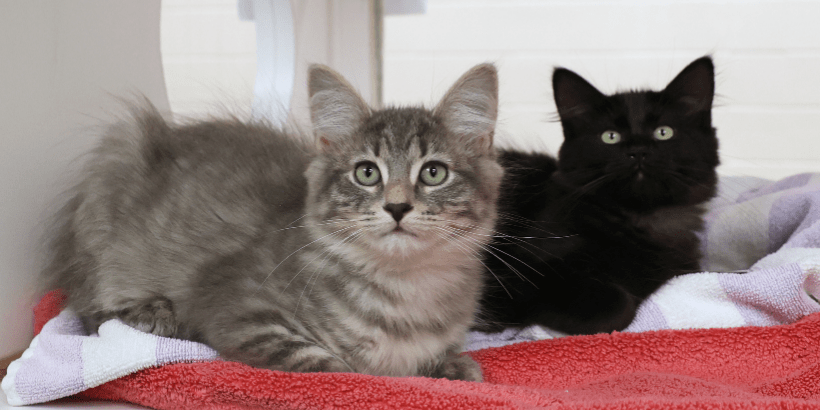
Training your cat to willingly enter and be comfortable in a carrier means an easier process for you when you transport them in the future, whether for regular vet visits or in an emergency situation. Your cat will learn that the carrier is a safe place and won’t experience stress and fear when entering the crate.
General
It takes only a few minutes of training per day for your cat to start associating the carrier with a comfortable spot to rest, a source of treats, and a safe place. To ease training, carriers should always be left out as another place to rest in the home. It may take days to months of training for your cat to readily enter a carrier and be comfortable with transport, but it makes life so much easier for you and your cat!
Set Up
- Place the carrier in an area the cat already uses for resting – the area should be quiet, calm, and protected from lots of interruptions. Make it into a comfy shelter with a soft blanket inside and secure the door open, or remove it completely. Some cats may like an additional towel draped over the top.
- If the carrier has a removable top (is a hard-sided plastic carrier) and the cat is hesitant to approach, start with using only the bottom half of the carrier. As your cat progresses in training, you can place the top over more of the carrier until it fits in its normal spot.
- For cats that are fearful of the carrier or have negative associations with its use, use Feliway Classic spray on the inside to make the carrier more comforting for the cat. This should be applied at least 10 minutes prior to each training session and when the cat is not inside.
- Throughout the process, remember there’s no need to rush training: this causes fear and sets you back. Work at the cat’s pace to succeed.
Entering the Carrier
- Two to three times a day, for 5-10 minutes, encourage your cat to approach the carrier by tossing toys inside, putting one or two treats within, or playing with wand toys in and around it. You can also feed your cat’s regular meals inside or near the carrier. If the cat is hesitant to enter the carrier, just start by rewarding them for being near it.
- Gradually work up to having them enter and relax inside. Keep the door firmly secured open. When your cat enters, feed your cats some treats or give some toys through the side or back of the carrier, so they stay in a bit longer and have to enter more of the carrier.
- If your cat enters the carrier on their own outside of training, reward that, too! Reward with more play, treats, gentle petting, or calm verbal praise – whatever the cat likes best. This phase usually takes one or two weeks, and may be longer.
Closing the Door
- Before you close the door of the carrier with your cat inside, practice latching the door first. Some carriers will move around or make noise when closing, which may startle the cat. Practice smoothly and gently closing the door and latch.
- When the cat is reliably entering the carrier, practice calmly closing the door part way while they are comfortably resting inside. Open the door, reward, and praise as before. If your cat gets up and walks out when you open the door again, entice them in again if they are comfortable so you can repeat the process a few more times.
- Gradually work up over the course of days or weeks to closing and latching the door. It may help to feed treats or use toys through the opposite side of the carrier to keep your cat away from the closing door.
- Continue this section until your cat reliably rests in the carrier with the door latched for about 15 minutes. Feed treats or reward as your cat prefers intermittently as needed.
Carrying
- Before lifting up a carrier with the cat inside, please make sure your carrier is properly put together, with the handle, sides, and all connections thoroughly secure and safe.
- With the door latched, teach the cat to be relaxed while in the carrier as the crate is picked up and set down. First tilt the carrier up a half inch and gently set it back down right away. Reward immediately after.
- Over the next few weeks, you can progress to lifting the carrier higher up off the floor, moving it to another room, or carrying it around the house. Avoid jolting the carrier; move smoothly.
Travel
- Once your cat is comfortable, you are now prepared to take your cat to any appointments or visits outside your home. When in the car, you may need a second person to reward with a constant supply of treats or comforting words.
- Be mindful if carrying a cat outside to avoid mishaps. Cover the carrier with a towel spritzed with Feliway to reduce visual stimulation and stress.
- During travel, minimize loud noises such as garage doors opening and car doors slamming. Please drive carefully to minimize unnecessary jolting.
Helpful Tips
- Giving rewards to your cat is for two things: 1. being in the carrier and 2. being calm within.
- Make sure to give treats, toys, or praise when the cat is inside the carrier, not exiting, and don’t make a big deal whenever they choose to exit. You don’t want to reward for leaving the crate, just for entering.
- Praising and rewarding the cat is to reinforce their calm emotional state, so stop the training session if the cat becomes frightened. A cat might allow being put in a carrier, but if they are tense and scratching to get out, you are exposing them to a stressful situation – they can’t be calm and you’ve pushed training too far too quickly. In the next session, move back to the last step in the training plan where the cat was comfortable.
- Once the cat is fully comfortable being transported in a carrier, training sessions can be reduced but still continued. Keep the carrier out in the house as another place to rest so you and your cat don’t forget the training you have worked on!